The CD player has gone the way of the Walkman and the record player before it. For several years, consumers have increasingly turned to their smartphones to listen to digital music, and the change has destroyed once-giant retailers like Virgin and Tower Records.
On a street in Brooklyn’s Flatbush neighborhood, Ellen Chen found one of New York City’s rare surviving CD retail stores.
HOST INTRO: IN THE WAKE OF THE SAN BERNARDINO MASS SHOOTING, U.S. SENATOR CHUCK SCHUMER RENEWS A PUSH TO KEEP INDIVIDUALS SUSPECTED OF TERRORISM FROM BEARING ARMS. REPORTER ELLEN CHEN HAS THE DETAILS.
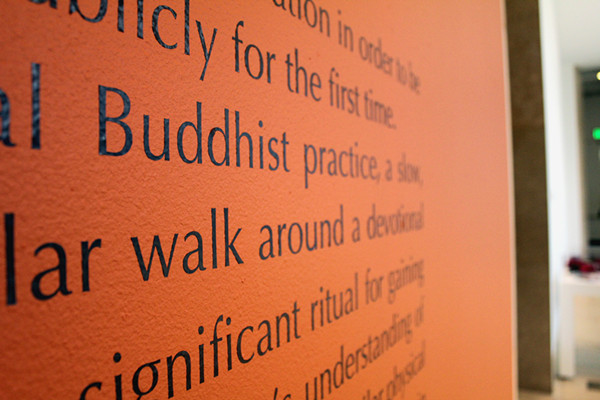
A visitor is reading the introduction about the exhibition.
Photos & Story by Lingnan Ellen Chen
The Blanton Museum of Art in the University of Texas at Austin is exhibiting collections of 8 Tibetan thangkas, which are traditional religious paintings about Tibetan Buddhism, that are displayed publicly for the first time since they had been created.
Introduction on the wall
Originally collected by Theos Bernard, who has been to Tibet as a scholar as well as an explorer, and now owned by the Art Museum and Pacific Film Archive in the University of California, Berkeley, the Into the Sacred City: Tibetan Buddhist Deities from the Theos Bernard Collection emphasizes on ritual exercises of Buddhism from fifteenth to twentieth century.
Walking into the showroom, visitors will find themselves in an annular space colored in cinnabar. Smell of dusty wood curl up as they breathe and intertwine with the dusky light as they observe. Some muffled Tibetan chant keep wandering in the room and reflecting the background of the propaganda of Buddhism. People may calm down and slacken their paces in such a peaceful place.
If they come near the thangkas, they may notice that the thangkas are hanged by light brown ribbons on top which enable Tibetan people to hang these paintings at home or in monasteries. One of the thangkas is even decorated by a cloth curtain in lemon yellow with violet and jade lines on it. Visitors may not trace the age through the flatly framed creations; however the intricate cracks on the surface of the thangkas caused by rolling and unrolling the painting wholly reveal the reality that the treasures have been existed for centuries’ long.
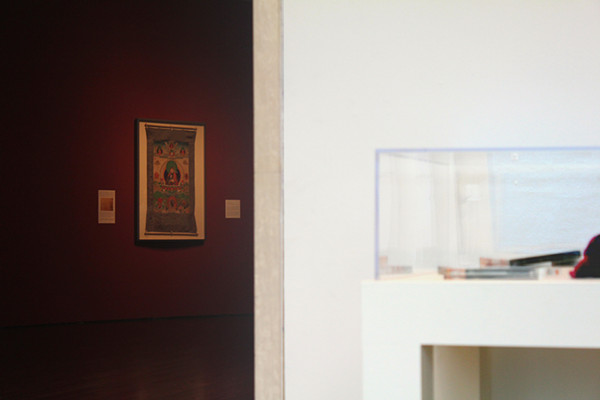
A thangka hanging on the wall
Five smaller square thangkas array neatly in a pattern which the positions of the deities in the images follow. Natural plant-based pigments are used in painting thangkas; the colors fit the sketch lines perfectly, staying in brand-new conditions and not turning pale. It’s worth mentioning that the fabrics that carry the images are all hand-made, making the thangkas even more precious.
Student Blanche (unfortunately, she prefers not to offer her full name) expresses her favor to the collections of thangkas: “They are very interesting. I like the series on the wall; they look similar, but if you come up close to them they are very different..”
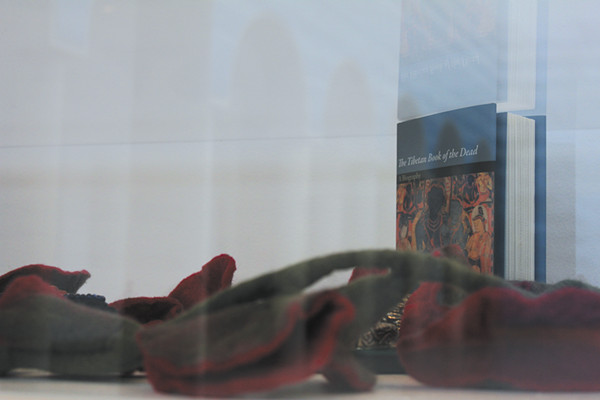
“The Tibetan Book of the Dead” is displayed outside the exhibition showroom.
A navy-blue book is displayed on a thick wooden shelf – Penthouse of the Gods, a memoir written by Bernard, records his experience in Tibet. Above the shelf there is a small sign writing “handle with care” because the book is losing its original novelty and oxidizing into a yellowish look. Visitors, who certainly may not ignore the book, will be curious and reach out their hands to turn the pages. They may see the photos of Tibetan people in the book smiling vividly as if these people are right in the showroom.
Graduate student Chelsea Heatheringson praises the rare collection: “I think they are beautiful, and the history is interesting. I’ve always been interested to Buddhism, so I find the portrayal of the deities interesting from the historical perspective.”
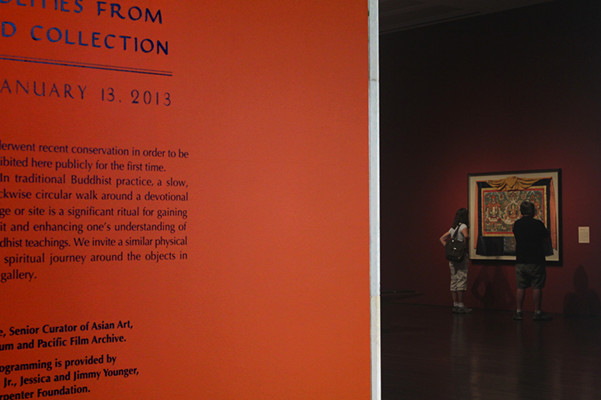
Two visitors are watching one of the thangkas on the wall.
As soon as visitors step out of the showroom, they leave a place of meditation, in which holds the exhibition until January 13th, 2013. It’s worth mentioning that on November 14th, 2012, 10 monks from the Drepung Loseling Monastery in Atlanta will be invited to create a sand Mandela at the scene. The Mandela, a figure in Buddhism, will be displayed publicly for five days, according to the website of Blanton Museum of Art.
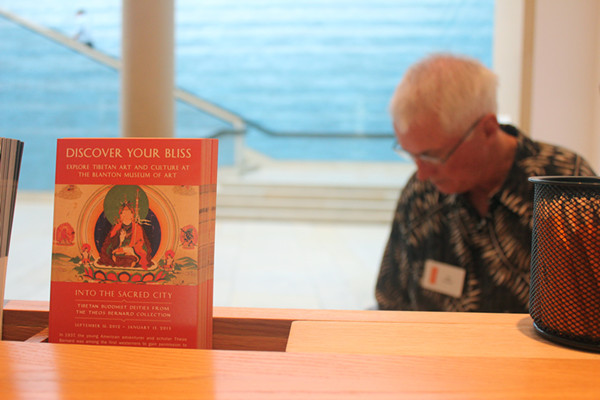
The fliers about the exhibition is placed on the information desk in Blanton Museum of Art.
(For more information about the exhibition, please click here.)


 Ellen Chen